.png)
Brown Recluse Spiders in Wichita: What Late Summer Really Means for Your Home

If you live in Wichita, you have heard the name. Brown recluse.If you live in Kansas, dealing with brown recluse spiders Wichita homeowners often encounter can be unsettling.
Maybe a neighbor found one in a boot. Maybe you spotted a small brown spider in the garage and your stomach dropped.
Here is the honest truth. Brown recluse spiders are common in Kansas. They are also widely misunderstood.
Let's clear it up.
What Is a Brown Recluse Spider?

The brown recluse is a small, light brown spider found across the south central and Midwestern United States. Kansas sits right in the middle of its range.
They are shy. That is where the name comes from. They hide in dark, quiet spots and they avoid people.
A few quick facts from Kansas State University research:
They are active roughly March through October
They can survive up to 10 months without food or water
They take 8 to 15 months to reach adulthood
Adults can live 2 to 3 years
That last one matters. A recluse population does not show up overnight. It builds slowly, out of sight.
You can read the full K-State Research and Extension publication on brown recluse spiders in Kansas right here. It is a great four page read with clear photos.
Why Are Brown Recluse Spiders in Wichita More Active in Late Summer?
Late summer is prime time. Temperatures are warm. Insects are everywhere. Recluse spiders hunt at night and they are moving.
By October they slow way down. From October through March they are mostly dormant, even inside heated homes.
So August and September are when Wichita homeowners notice them most.
How Do You Identify a Brown Recluse?

Most brown spiders in your house are not brown recluse. That is worth saying twice.
Here is what actually sets them apart:
The fiddle marking. A dark violin shape on the back, just behind the head. The neck of the violin points toward the abdomen.
Six eyes, not eight. Most spiders have eight. Recluse have six, arranged in three pairs. This is the most reliable sign.
Uniform legs. No stripes. No spines. Solid tan legs.
Size. About the size of a quarter with legs extended.
No fancy web. They build loose, messy webbing in hidden corners. If you see a neat wheel shaped web on your porch, that is not a recluse.
If you are unsure, do not guess. Catch it in a jar and let a pro take a look.
Where Do Brown Recluse Hide in Wichita Homes?
They want dark, dry, undisturbed space. Think of the places you never touch.

Common spots:
Cardboard boxes in the basement or attic
Behind and inside insulation
Storage closets you open twice a year
Under and behind furniture that never moves
Inside shoes, boots, and gloves left on the floor
Garage shelves and crawl spaces
Behind picture frames and baseboards
Cardboard is the big one. Recluse love it. Plastic totes with tight lids are a real upgrade if your basement or garage is full of boxes.
Are Brown Recluse Bites Dangerous?
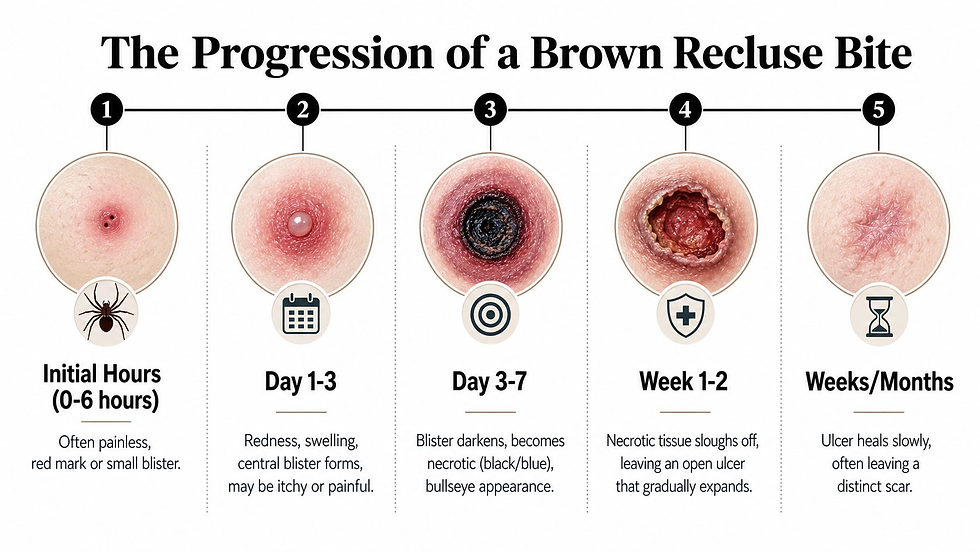
They can be. But bites are rare, and the risk is often overstated.
Recluse venom is hemotoxic. It can cause a slow healing wound that sometimes ulcerates. That is why it gets so much attention.
Here is the part people miss. These spiders do not chase you. A bite almost always happens when the spider is trapped against skin. You roll onto one in bed. You pull on a shirt off the floor. You reach into a box.
If you think you have been bitten, see a doctor. Do not wait it out and do not try to treat it at home. A real diagnosis matters, and many wounds blamed on recluse turn out to be something else entirely.
What Can You Do Yourself?

Plenty. Prevention works better than panic here.
Shake out clothing, shoes, and towels before you put them on. Especially anything that has been on the floor.
Get clothes off the floor. A hoodie on the carpet is a perfect hiding spot.
Swap cardboard for sealed plastic bins in storage areas.
Pull beds away from walls and keep bedding from touching the floor.
Vacuum corners, closets, and behind furniture regularly.
Use sticky traps along baseboards, in closets, and behind furniture. This is the single best way to monitor a population and it catches wandering spiders.
Clean up dead insects. Dead bugs are food. No food means fewer spiders over time.
Seal entry points. Weatherstrip doors, caulk gaps, screen vents.
One thing to know before you head to the hardware store. K-State research found that over the counter sprays do not reliably control brown recluse. The spider has to make direct contact with the product, and these spiders spend most of their life tucked away where sprays never reach.
That is why the DIY route often disappoints people. It is not that you did it wrong. It is that surface spraying alone does not match how this spider lives.
When Should You Call a Professional?
Call when:
You are finding recluse repeatedly, not just once
Sticky traps are filling up
Someone in the home has been bitten
You have a basement, attic, or crawl space full of cardboard and clutter
You are buying or selling a home and want a clear picture
A real spider control plan means inspection, targeted treatment in the voids and cracks where they actually live, monitoring with traps, and honest advice about clutter and sealing. Not a quick spray around the baseboards.
The Bottom Line for Wichita Homeowners
Brown recluse are part of life in Kansas. They have been here a long time and they are not a sign of a dirty house.
But you do not have to live with a growing population. A few habit changes plus a smart treatment plan makes a real difference.
At Bug Shockers, we are a fourth generation, family owned team right here in Wichita. No contracts. Ever. Just straight answers and treatments that work.
Got a spider you cannot identify? Send us a photo. We are happy to take a look, no strings attached.
Bug Shockers Pest Control. The Shockingly Smart Choice.

Comments