.png)
Crickets in Overland Park Homes: Why Late August Is the Turning Point
Short answer: Field crickets grow up outdoors all summer and reach adult size in late August. As nights cool, dealing with crickets in Overland Park homes becomes a common issue as they move toward the warmest structure nearby—your house. . In the Kansas City metro they end up in basements, garages, and window wells because those are the easiest ways in. Sealing the gaps beats spraying alone every time.
Johnson County homes have one thing working against them here: basements.
Most of the metro sits on full basements or walkouts. That means more below grade windows, more window wells, more egress openings, and more cool damp space that crickets and spiders both like.. A two story in Olathe with a finished walkout has a lot more.
Here is what happens next, and how to get in front of it.

What makes crickets move indoors this time of year?
It is the calendar, not bad luck.
Kansas field crickets overwinter as eggs in soil. They hatch and grow quietly all summer in tall grass, drainage ditches, and landscape beds. By late August they are full grown adults, and that is when they start traveling.
K-State Extension Entomology notes that crickets can sense heat gradients. Your home absorbs sun all day and releases that heat at night. Crickets follow it. The south and west sides of a house take the most pressure.
Metro specifics make it worse in some neighborhoods:
Homes backing to greenway, creek, or open field
Mature tree neighborhoods with heavy leaf litter and shade
Newer construction next to undeveloped ground
Heavy landscape lighting near doors
Are these field crickets or camel crickets?
In Kansas City you will probably see both, and they show up in different places.
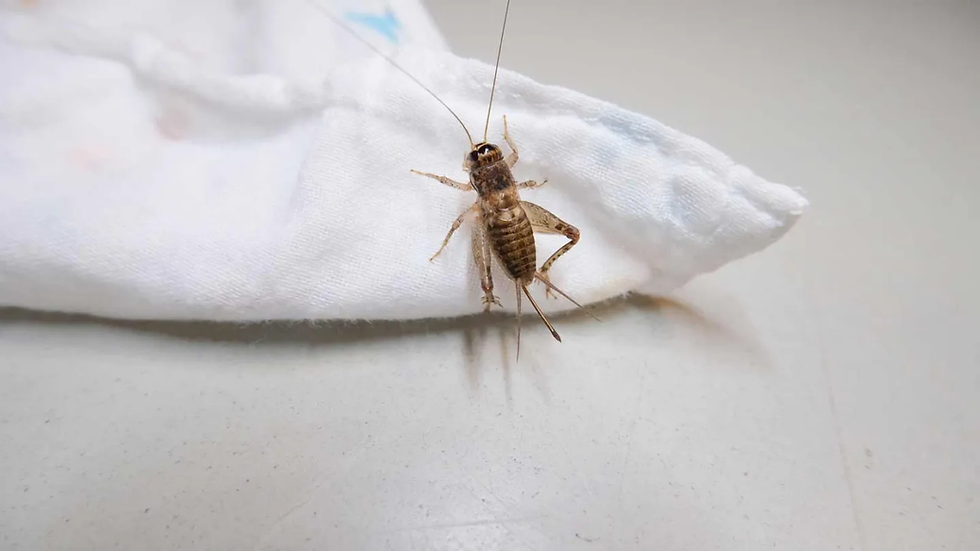
Field crickets are the black or dark brown ones about an inch long. Loud. Usually found in garages, on patios, and near door thresholds.
Camel crickets are the humpbacked ones with long legs and no wings. They do not chirp. They jump straight at you when startled, which is how they earned the nickname "sprickets." These are your basement and crawl space cricket, and metro basements are ideal for them.
K-State's cricket publication lists camel crickets as a nuisance rather than a destructive pest, though heavy outdoor numbers can leave lawns lumpy from burrowing. Full details in MF749 Crickets: Home and Horticultural Pests.
Do crickets cause real damage?
Minor damage, yes.
Crickets are opportunistic feeders. Indoors they chew on paper, cardboard, and fabric. Wool, cotton, and silk are the usual targets. Stored boxes in an unfinished basement are the classic spot.
For most families the real problems are noise and cleanup. One field cricket behind a basement wall can cost you a week of sleep. And camel crickets leave droppings in storage areas that people mistake for something worse.
Why do spiders follow crickets into the house?
Because crickets are food.
This is the part that matters most in Johnson County. The Johnson County Extension office puts it plainly: as more insects come inside, more spiders follow the food source. Their spider guide notes that brown recluse spiders are very abundant in the area and thrive in basements, attics, and storage areas, partly because those spaces let them feed on the insects that already got in.
Black widows are less common in Johnson County than recluses, and when they do show up they tend to be outdoors, around sheds, woodpiles, and low quiet spots in the yard.
So the cricket work you do in August is really recluse prevention for October. Cut the food supply, cut the spiders. More on identification in Johnson County Extension's brown recluse article.
Where are crickets getting into Kansas City metro homes?
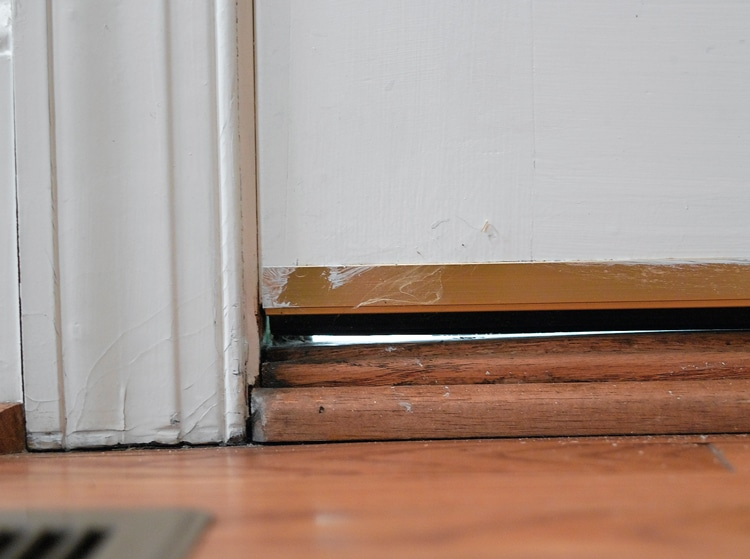
They are not chewing in. They are walking through gaps that already exist.
The usual suspects on metro homes:
Window wells. Number one on basement homes. Leaves collect, moisture stays, crickets gather, then find the window frame.
Garage door bottom seals that are cracked, curled, or short at the corners
Exterior door sweeps worn down from years of use
Walkout and egress door thresholds that no longer sit flat
Sump pump discharge lines and utility penetrations
Gaps where siding or brick meets the foundation
Crawl space vents with torn screen
Rim joist gaps in unfinished basement ceilings
If you can slide a pencil under your garage door at the corner, a cricket walks in standing up.
What can I do this weekend?

Six steps. Most cost very little.
Clean out every window well. Leaves out, debris out. Add a clear well cover. This is the single biggest win on a basement home.
Replace the garage door bottom seal and add sweeps to any exterior door showing daylight underneath.
Pull mulch and rock back from the foundation. Leave a dry strip along the wall.
Trim grass, ivy, and ground cover off the foundation line. Growth touching the house is a highway.
Swap bright white exterior bulbs for warm or amber LEDs, and move lighting away from doors when you can.
Get cardboard off the basement floor. Sealed plastic tubs on shelves. Cardboard on concrete is prime recluse habitat.
Does a spray alone fix it?

No, and anyone promising that is overselling.
A well timed exterior perimeter treatment does real work. It creates a treated band crickets have to cross and knocks down the population already staged along the foundation. K-State is honest about the limits though, noting that outside barrier treatments do not guarantee every invader is stopped.
Seal first, then treat. Exclusion without treatment is slow. Treatment without exclusion is temporary. Together they work.
Timing matters. Late August into September is the window across the metro. Getting ahead of the move is far easier than chasing camel crickets out of a finished basement in November.
When is it time to call someone?
Call if you are seeing any of these:
Crickets in living space, not just the garage
Camel crickets in the basement more than once a week
Chirping inside a wall at night
Any brown recluse sighting, anywhere in the house
A basement or crawl space that stays damp
That last one is the tell. Moisture is the common thread behind crickets, recluses, and roaches all at once. Fix the water and you fix a lot of pests at the same time.
Bottom line for metro homeowners
Crickets in August are normal. Crickets in your finished basement in November mean gaps that never got sealed.
Spend an hour this weekend on window wells, door seals, and the porch light. Then get a perimeter service on the calendar before the first real cool down.
Handle the crickets now and you skip the recluse season that usually follows.
Frequently Asked Questions:
Why are there so many crickets in Overland Park right now?
Field crickets reach adult size in late August and move toward warm structures as nights cool. Homes near greenway, creek, or open ground see the heaviest pressure, and basement homes give them more ways in.
What are the jumping crickets in my basement?
Those are camel crickets, sometimes called sprickets. They are humpbacked, wingless, and do not chirp. They prefer cool damp spaces like basements and crawl spaces. They do not bite and are a nuisance rather than a health risk.
Do crickets attract brown recluse spiders?
Indirectly, yes. Spiders follow their food source indoors. Brown recluses are common in Johnson County basements, attics, and storage areas partly because insects that get inside give them something to eat. Reducing crickets reduces spider pressure.
How do I keep crickets out of my window wells?
Clear out leaves and debris, make sure the well drains, and install a clear cover. Then check the seal around the window frame itself. Window wells are the most common basement entry point in the Kansas City metro.
How long does cricket season last in Kansas City?
Pressure usually runs from late August through the first hard freeze. Crickets that make it into a heated basement can survive well into winter.
When should I schedule a fall pest treatment in the KC metro?
Late August through September, before nighttime temperatures drop and the move toward structures begins.
Bug Shockers Pest Control serves Overland Park, Olathe, Lenexa, Shawnee, Leawood, and Kansas City MO. Family owned. No contracts. 5 star rated. The Shockingly Smart Choice.
Schedule your fall service or call us and we will walk the foundation with you.


Comments