.png)
Wasps, Hornets, and Bees in kansas city: How to Tell Them Apart
Updated: Sep 28
It is buzzing. It is angry. It is hovering near your back door. When it comes to identifying wasps, hornets, and bees in Kansas City, knowing exactly what you are looking at helps you make smarter decisions about what to do next.

Honey bees

Honey bees are fuzzy, golden brown, and about half an inch long. They are usually focused on flowers, not you. A honey bee can only sting once, then it dies. They are not aggressive unless their hive is threatened.
Honey bees are also incredibly important pollinators. If you have a swarm or hive on your property, please do not spray it. We can refer you to a local beekeeper who will relocate them.
Bumble bees

Bumble bees are bigger, fuzzier, and often have more black on the body. Like honey bees, they are pollinators and generally not aggressive. They nest in the ground or in old rodent burrows. Give them space and they will give you space.
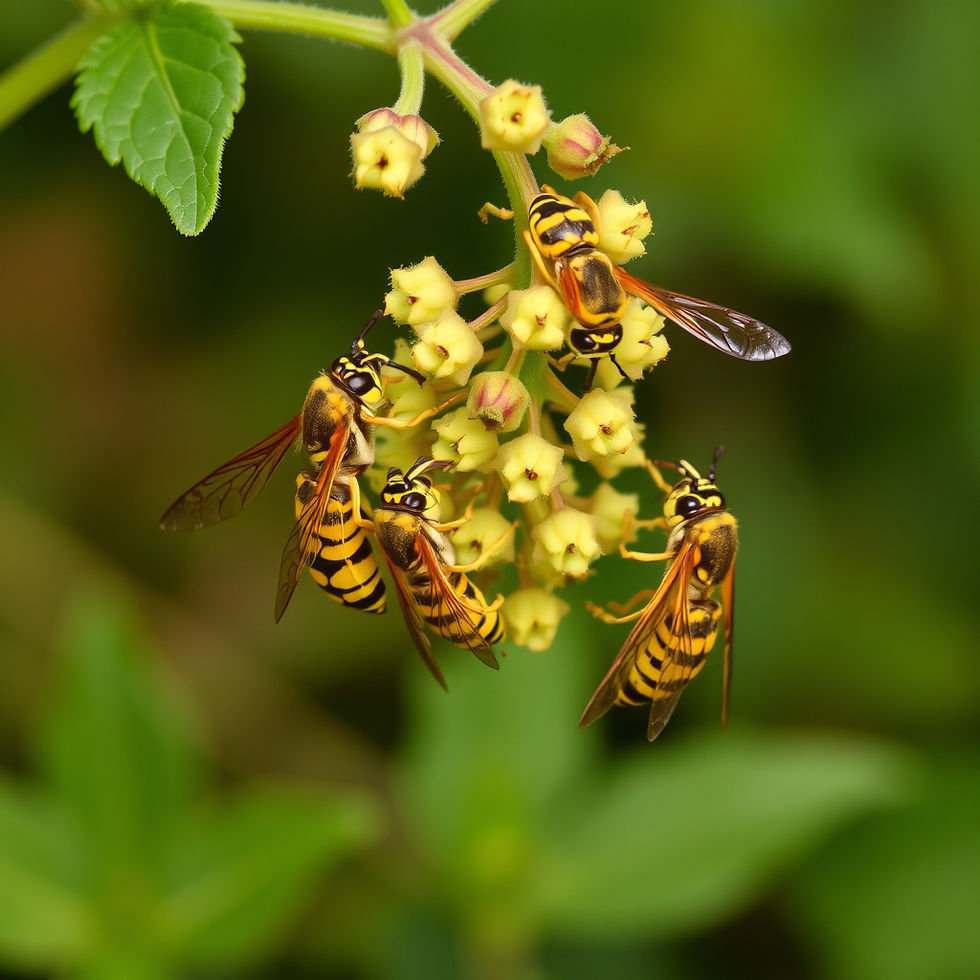
Paper wasps are slim with long dangling legs in flight. Their nests look like upside down umbrellas, often under eaves, deck railings, swing sets, and grills. They are not super aggressive but will defend the nest.
Yellow jackets
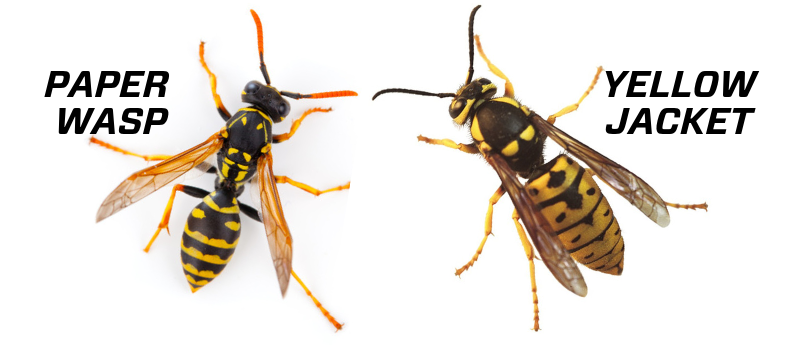
Yellow jackets are bright yellow and black, smaller than paper wasps, and much more aggressive. They often nest in the ground or in wall voids. They love picnics, soda cans, and trash. If you see them coming and going from a hole in the ground, keep your distance.
Bald-faced hornets
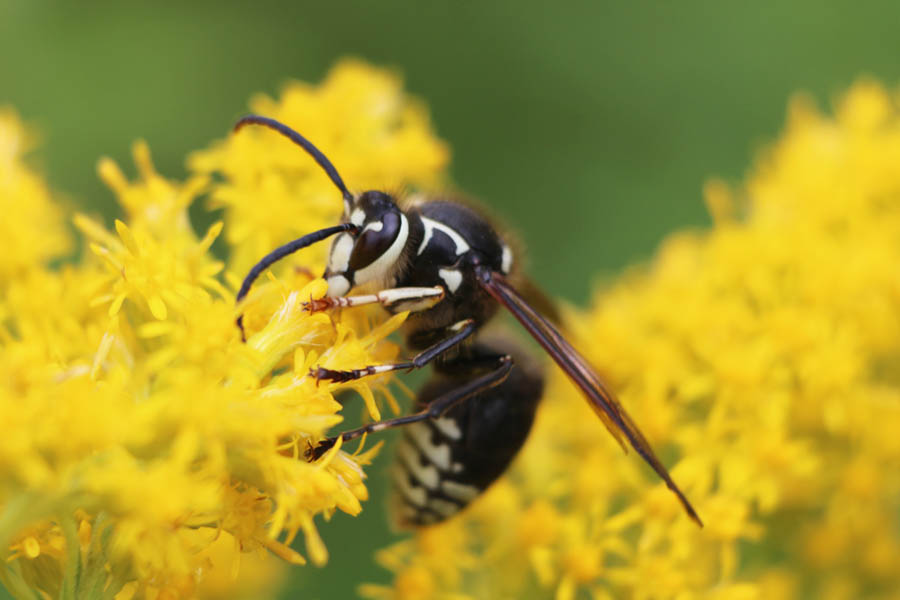
These are large, black and white, and build big football-shaped paper nests in trees and under eaves. They are very aggressive near the nest. If one is on your house, do not try to take it down yourself.
Cicada killers
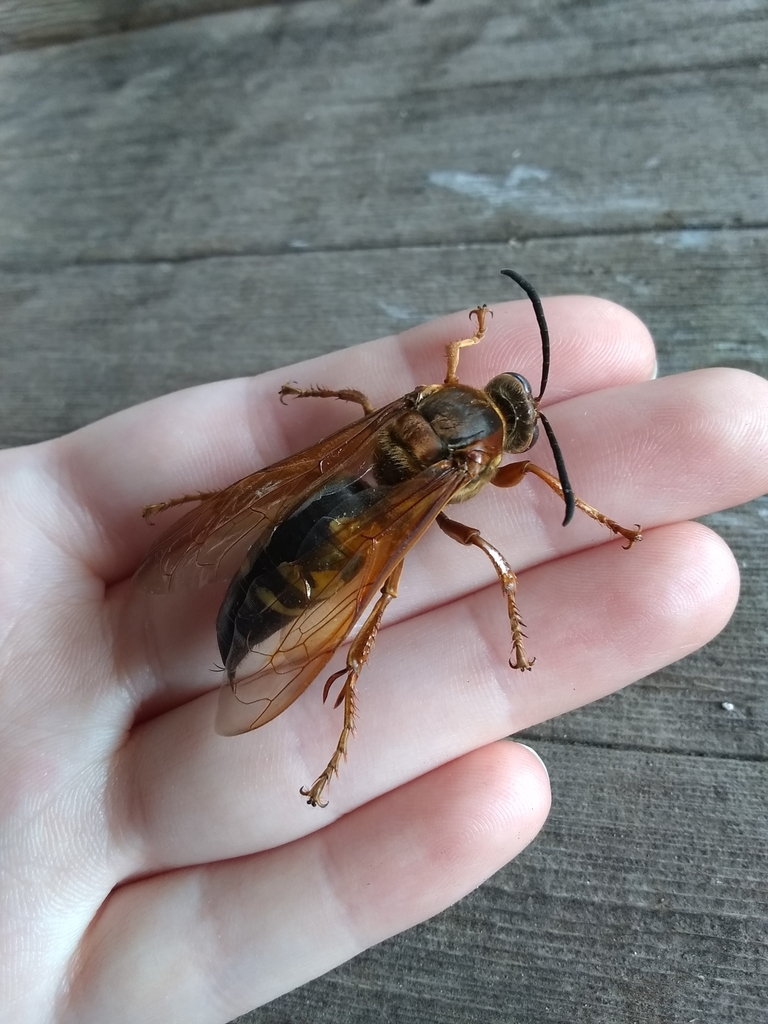
These look terrifying. They are huge wasps, sometimes nearly two inches long, that dig burrows in bare soil. They almost never sting people. They hunt cicadas. The wooded yards across the KC metro see plenty of these in July. Leave them alone and they leave you alone.
When to Call for Wasps, Hornets, and Bees in Kansas City
Small starter nest under your eave? You can sometimes handle that with a quality wasp spray, in the early morning when the wasps are sluggish.
A larger nest, a nest you cannot see all of, a ground-nesting yellow jacket colony, or any nest near where kids play? Call us. Stinging insect work is not the place to take a chance, especially if anyone in your home is allergic.
Learn more
K-State Research and Extension has helpful information on Kansas stinging insects: https://entomology.k-state.edu/extension/
The Bug Shockers difference
We treat stinging insects with care, the right gear, and the right product. If you are seeing nests around your Overland Park, Leawood, Olathe, Lenexa, or Shawnee home, give us a call.
Bug Shockers Pest Control. Local. Family-Owned. The Shockingly Smart Choice.
Know Which One You Have Before Anyone Touches It
They all sting. They do not all behave the same way, and that changes what you should do.
Paper wasps. Slender, long legs that dangle in flight. Open, umbrella shaped comb under an eave, a deck rail, or a grill lid. Small colonies. They defend the nest but they are not looking for a fight.
Yellowjackets. Short, stocky, bright yellow and black. They nest in the ground, in wall voids, and behind siding. Very aggressive when disturbed, and they can sting repeatedly. These are the ones that ruin a cookout in August.
Bald faced hornets. Big, black and white. That gray football shaped nest hanging in a tree or off a roofline is theirs. Extremely defensive within about ten feet of the nest.
Mud daubers. Long, thin waist, often metallic blue or black. They build the little mud tubes on brick and siding. Solitary and almost never sting. Leave them alone and they will leave you alone.
Honey bees. Fuzzy, golden brown. Protected and valuable. If you have an actual honey bee swarm or colony, it should be removed by a beekeeper, not exterminated. Send us a photo and we will tell you which you have.
Carpenter bees. Look like bumble bees but with a shiny black abdomen. They drill perfectly round holes in fascia, decks, and rails.
Why Late Summer Is Always the Worst
Wasp colonies start small in spring and peak in August and September. By then a yellowjacket nest can hold thousands of workers.
At the same time, their natural food supply drops off. That is why they suddenly get interested in your soda can, your trash, and your patio table. They are not turning mean. They are running out of food.
This is why nobody notices a nest in June and everybody calls in late August. It was there the whole time.
What Not to Do
Do not spray a nest at midday. Most of the colony is out foraging, so you kill a fraction and enrage the rest. If a nest has to be treated, dusk is the time, when everybody is home.
Do not plug a hole in your siding. If yellowjackets are entering a wall void, sealing the outside entrance forces them to chew a new exit, and sometimes that exit is into your living room.
Do not knock a nest down with a broom or a hose. That is a plan with no second step.
Do not climb a ladder to do any of this. More people are hurt by the fall than by the stings.
When It Is Worth Calling
Nest near a door, a walkway, a play set, or anywhere kids and pets pass.
A nest inside a wall, soffit, or attic where you cannot see the whole thing.
Anything above head height.
Anyone in the house with a known sting allergy.
A nest the size of a football or larger.
And when it is not worth calling: a couple of mud dauber tubes on the brick, or a small paper wasp nest under an eave nobody walks past. We will tell you that, and we will not talk you into a treatment you do not need.
Text Us a Photo First
Take the photo from a safe distance and zoom in. Do not get close to a nest for a picture.
Send it to (913) 222-2847. Most of the time we can tell you what you have and whether it needs to be handled the same day. There is no charge for that.
If it turns out to be honey bees, we will tell you that too and point you toward a beekeeper instead of treating them.
Prevention That Actually Works
Knock down new paper wasp starts in April and May, when they are the size of a quarter and hold one or two wasps. That is the easy window.
Keep trash can lids closed and rinse recycling.
Seal gaps in soffits, fascia, and siding before spring.
Cover outdoor pet food and clean up fallen fruit.
Check under deck rails, grill lids, and playset tubing in early spring before nests get established.
Frequently Asked Questions
How do I tell a wasp from a bee?
Wasps have smooth, shiny bodies and a narrow waist. Bees are fuzzy and rounder. Wasps can sting repeatedly. A honey bee stings once and dies, so it rarely stings unless it is threatened.
What is the difference between a yellowjacket and a paper wasp?
Yellowjackets are short and stocky with bright yellow and black bands, and they nest in the ground or in wall voids. Paper wasps are slender with dangling legs and build an open, umbrella shaped comb under an eave. Yellowjackets are far more aggressive.
When are wasps worst in Kansas City?
August and September. Colonies peak in late summer at the same time their natural food supply runs out, which is why they suddenly show up at cookouts and trash cans.
Should I spray a wasp nest myself?
Usually not. Midday spraying misses most of the colony because the workers are out foraging, and it provokes the rest. Nests in wall voids, above head height, or near a doorway are worth handing off.
Why did wasps get into my house after I sealed the hole?
Sealing the outside entrance of a wall void nest forces the colony to chew a new way out, and that new exit is sometimes on the interior side. Never plug the entrance while a colony is active.
Are mud daubers dangerous?
No. Mud daubers are solitary, they almost never sting, and they actually prey on spiders. The mud tubes on your brick can be scraped off and the wasps left alone.
Do wasps come back to the same spot every year?
Paper wasps and yellowjackets do not reuse an old nest, but they do reuse good locations. A sheltered eave or a wall void that worked last year will attract a new queen this year, which is why sealing gaps matters more than removing old nests.
What should I do about honey bees?
Do not treat them. Honey bees are valuable and a swarm or colony should be relocated by a beekeeper. Text us a photo and we will tell you whether you have honey bees or something else.
Can you identify a wasp or nest from a photo?
Most of the time, yes. Take the shot from a safe distance and zoom in, then text it to (913) 222-2847. No charge.


Comments