.png)
Battling Bagworms? How to Protect Your Kansas Landscape
Updated: 5 days ago
As a homeowner, discovering bagworms hanging from your trees and shrubs can be alarming. These destructive pests are known for infesting landscapes and, if left untreated, can cause serious damage to both ornamental and shade trees. The good news is that with the right knowledge and timely action, bagworms can be effectively controlled.
In this blog, we’ll explore what bagworms are, how they damage plants, and the most effective strategies for eliminating them and protecting your landscape.
Understanding BagWorms:
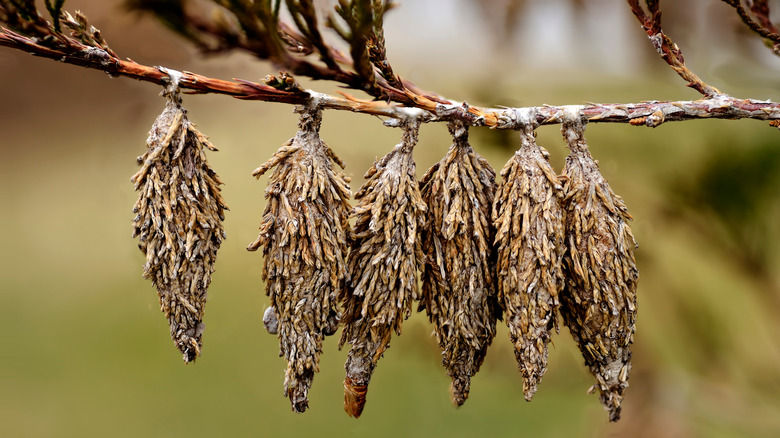
BBagworms are moth larvae belonging to the family Psychidae. They are easily identified by the cone-shaped bags they create using silk and bits of leaves, needles, and twigs from the host plant.

Bagworms are common throughout North America and frequently infest:
Evergreen trees (juniper, arborvitae, cedar, pine)
Deciduous trees
Ornamental shrubs
Because their bags blend in with foliage, infestations often go unnoticed until damage becomes severe.
Bagworm Life Cycle and Behavior:
Bagworms have a unique and predictable life cycle, which makes timing critical for control.
Egg Stage
Bagworms overwinter as eggs inside the female’s bag. These bags often resemble small pinecones and remain attached to branches throughout winter.
Larval Stage
In late spring or early summer, eggs hatch and larvae emerge. Young larvae begin feeding immediately and construct small bags that grow as they mature.
Pupal Stage
Once fully grown, larvae attach their bags firmly to branches and pupate inside.
Adult Stage
Adult males emerge as small moths, while adult females remain inside their bags. After mating, females lay eggs inside the bag, completing the cycle.


Damage and Impact on Trees:
Although bagworms may appear harmless initially, their feeding habits can be devastating.

Bagworm larvae feed on foliage and can:

Defoliate entire branches
Strip evergreen trees completely
Weaken plants and stunt growth
Increase susceptibility to disease and other pests
Severe infestations may result in permanent damage or even plant death, especially in evergreens that cannot regenerate lost foliage.
Effective BagWorm Control Strategies:
1. Manual Removal
One of the most effective control methods is hand-removing bags during fall, winter, or early spring, before eggs hatch. Bags should be destroyed after removal to prevent reinfestation.
2. Prune Infested Branches
If damage is localized, pruning affected branches can reduce populations. Dispose of removed material away from your property.
3. Encourage Natural Predators
Birds and beneficial insects, such as parasitic wasps, help control bagworm populations naturally. Creating diverse landscaping and installing birdhouses can support these predators.
4. Professional Insecticide Treatments
If infestations are active and widespread, insecticide treatments may be necessary. Timing is critical, treatments are most effective when larvae are young.
👉 Learn more about our professional pest control services here:https://www.bugshockers.com/wichita-pest-control
Our trained technicians can identify the proper treatment and apply it safely and effectively.
5. Early Detection & Monitoring
Routine inspections of trees and shrubs during late spring and early summer are key. Early detection prevents widespread damage and reduces the need for aggressive treatments.
Contact Bug Shocker pest control professionals to identify the appropriate insecticide and application method for your specific situation.
Expert Guidance on Bagworm Control
According to Kansas State University Extension, bagworms are most effectively controlled when treatments are applied shortly after egg hatch and before larvae mature: https://entomology.k-state.edu/
University extension resources consistently emphasize early intervention as the most effective prevention strategy.
Protect Your Landscape Year-Round
Bagworms are just one of many pests that can threaten your trees and shrubs. Ongoing pest management helps protect your entire property from seasonal invaders.
👉 Explore our general pest control services here:https://www.bugshockers.com/wichita-pest-control
Conclusion:
BBagworms may pose a serious threat to the health and appearance of your landscape, but with the right approach, they can be managed effectively. By combining manual removal, pruning, natural controls, and professional treatments when needed, you can protect your trees and shrubs for years to come.
If you suspect bagworm activity or want professional guidance, Bug Shockers Pest Control is here to help.
Contact us today and keep your landscape healthy, protected, and beautiful.

Timing Is Everything With Bagworms
This is the one pest where being three weeks late means waiting a whole year.
Here is the cycle. Eggs overwinter inside last year's bags, still hanging on the tree. They hatch in late May into early June in Kansas. The tiny larvae crawl out, spin their own small bag, and start feeding while dragging that bag around.
That crawling stage is the window. The larvae are exposed and small, and treatment reaches them.
By late July the bags are sealed and the larvae have stopped moving. At that point nothing sprayed on the outside gets in. You are done for the season no matter what you buy.
So the calendar matters more than the product. Late May through June in Kansas. Watch for bags the size of a grain of rice on arborvitae and juniper.
Bagworms Can Actually Kill an Evergreen
Most chewing insects are cosmetic. This one is not.
Deciduous trees like maple and honeylocust can lose leaves and push out new growth. Evergreens cannot. Arborvitae, juniper, spruce, and cedar do not regenerate foliage from bare wood.
A heavy bagworm year can strip an arborvitae, and the brown sections stay brown permanently. Two bad years in a row will kill the plant.
That is why a row of arborvitae along a property line is worth watching every June. Replacing a mature privacy screen is a real expense.
What They Look Like, and What Gets Mistaken for Them
A bagworm bag is a spindle shaped cocoon, one to two inches, covered in bits of the host plant's own foliage. That camouflage is why people walk past them for weeks. On a juniper, the bag looks like a juniper cone.
Early in the season the bags are tiny, a quarter inch or less, and look like small brown grains stuck to the tips.
Commonly confused with: pine cones, spruce cones, dead needle clusters, and spider egg sacs. If you are not sure, text a photo and we will tell you.
The Winter Job Nobody Does
From October through April, every bag still on the tree is full of eggs. Several hundred per bag.
Pick them off by hand and put them in the trash, not on the ground. On a small arborvitae or a single juniper this is genuinely effective and it costs you an afternoon.
Clip the silk strand as you go. The strand can girdle a small twig if it stays.
This will not solve a heavy infestation on a 20 foot spruce, but on shrubs it works and it is free.
Which Plants to Watch
Highest risk: arborvitae, eastern red cedar, juniper, and spruce.
Also hit: pine, cypress, honeylocust, maple, sycamore, and boxelder.
If you have a row of arborvitae, check it every June. That plant is bagworm candy and it does not recover.
When to Call Someone
Trees too tall to reach safely from the ground.
A whole privacy row of arborvitae or juniper.
Bags already present in spring and you want the hatch caught on time.
Browning that is spreading through a screen you cannot afford to lose.
And when not to. A few bags on a shrub you can reach is a job you can do yourself in an afternoon with a bucket. We will tell you that.
Frequently Asked Questions
When should you treat for bagworms in Kansas?
Late May through June, once the eggs hatch and the larvae are crawling. By late July the bags are sealed and outside treatment no longer reaches the larvae, which means waiting until next year.
Can bagworms kill a tree?
Yes, especially evergreens. Arborvitae, juniper, spruce, and cedar cannot regrow foliage from bare wood, so stripped sections stay brown permanently. Two heavy years in a row can kill the plant.
What do bagworms look like?
A spindle shaped bag one to two inches long, covered in bits of the plant's own foliage, which makes it look like a cone. Early in the season the bags are a quarter inch or smaller and easy to miss.
Should I pick bagworms off by hand?
Yes, between October and April. Each bag holds several hundred overwintering eggs. Remove them into the trash and clip the silk strand so it does not girdle the twig.
Do bagworms come back every year?
They can. Eggs overwinter in the bags left on the plant, so an untreated tree reinfests itself the following spring. Removing bags in winter breaks that cycle.
What trees do bagworms attack?
Arborvitae, juniper, eastern red cedar, and spruce are hit hardest. They also feed on pine, cypress, honeylocust, maple, sycamore, and boxelder.
Why did my arborvitae turn brown after bagworms?
Evergreens do not push new growth from bare wood. Once bagworms strip a section, that section stays brown. The damage is permanent even after the insects are gone.
Can you identify bagworms from a photo?
Most of the time, yes. Text a clear photo to (316) 775-7867 in Wichita or (913) 222-2847 in the Kansas City area and we will tell you at no charge.


Comments